
Polk County Neighbors by Source
Block research begins with geography, not a list of names. The parcel map defines which lots actually touch, sit behind, or face one address. The Assessor then identifies each owner of record and separates the property's situs address from the owner's mailing destination. Other sources add civic, voter, permit, deed, or historical context, but none creates a complete roll of Polk County neighbors. Keep the date and purpose of each source attached to every name.
| Source | What It Shows About a Block | Access |
|---|---|---|
| Polk GIS parcel map | Adjacent parcels, legal subdivision, addresses, geometry and map layers | Free identify, click and export tools |
| Polk Assessor cards | Owner of record, mailing and situs addresses, values and transfer references | Free address, owner or parcel search |
| Polk Recorder | Ownership changes across nearby parcels | Online 1992-present; older office and archive route |
| Iowa voter records | Confirmation for a known voter; regulated list products | Free narrow lookup; paid certified request for lists |
| Des Moines neighborhood finder | Civic boundary, status, leaders, contacts and meetings | Free public directory; no universal member roster |
| DMPL reverse directories | Historic address-to-occupant evidence | Digitized, microfilm and print access |
An owner name does not prove current occupancy. The mailing address may be elsewhere, and renters or relatives may not appear on the tax roll. A voter confirmation establishes registration details for a known person, not every adult or child at the address. Civic leaders represent an association but are not a list of all residents. These limits are part of an accurate neighbor lookup, not flaws to fill with guesses.
Place Polk County Neighbors on GIS
Open the Polk County GIS viewer and search by address, geoparcel, subdivision, or parcel. Choose the matching suggestion, zoom until parcel borders and street labels are clear, and turn on the Polk County Parcels layer. The map's visible field inventory includes owner or mailing fields, property-address parts, property city and ZIP, and parcel geometry. Not every value is guaranteed in every pop-up.
Use the point or box identify tool, not just labels printed on the map. Parcel corners, alleys, shared drives, rear lots, and lot splits can make the nearest building different from the legally adjacent parcel. Pictometry and historic imagery help confirm footprints and access. Flood, wetlands, zoning, contours, and land-use layers explain the block's physical setting, but they do not identify residents.
Export a dated JPEG or PDF with the layers named if you need a stable block record. Live maps change. Check the parcel identifier and legal subdivision on the Assessor card before attaching an owner name to the shape.
Map Polk County Neighboring Parcels
A consistent order keeps a corner or rear lot from being missed. Move around the target parcel in one direction and record identifiers before opening owner cards. This process is for the immediate block. For every parcel along a named road, use the fuller Polk County street directory method.
- Locate the target address and confirm its parcel number, legal subdivision, and property-address fields.
- Click the parcel on each side, then those across the street and behind the lot. Note alleys, corners, and split parcels.
- Open each identifier in the Polk County Assessor search. Record the owner, situs and mailing fields, legal description, and transfer reference.
- Compare the mailing address with the situs address. A match can support an owner-occupancy clue, but it is not a complete household finding.
- Save the search date. If the parcel sits at a county edge, repeat the check in the neighboring county's official GIS and assessor system.
The Assessor's general form can also search by a center parcel and radius, as well as by street, plat, ownership, values, class, district, and geographic controls. Its export choices include HTML, CSV, tab-delimited, and XLS output, with a limit of 5,000 HTML results. Use the smallest radius that answers the block question and keep parcel identity ahead of name matching.
Des Moines Neighbor Directory Boundaries
The Des Moines neighborhood finder is the official umbrella directory for city-recognized neighborhoods. It offers a selector, a list-all view, boundaries, status, contacts, meeting details, and downloadable leader lists. Neighborhood Services can be reached at neighborhoods@dmgov.org or 515-283-4775. The city's current map uses Chartered, Designated, Recognized, and Shared 1/2 categories.
| Civic source | Useful block detail | Limit |
|---|---|---|
| Neighborhood finder | Boundary, status, leader and meeting contact | Approximate civic geography, not parcel title |
| Neighborhood Services | Umbrella contact for recognized groups | No universal membership list |
| Downtown Neighborhood Association | Public downtown civic context and contacts | Leaders are not all downtown residents |
| Show Me My House | Neighborhood, ward, zoning, school and city-service layers | Address context may be approximate or incomplete |
The 2026 neighborhood map reports a 2020 Des Moines population of 214,133, but that number is citywide. It does not count a block. A neighborhood label, postal city, school district, ZIP code, and parcel jurisdiction are not the same boundary, so verify the parcel's actual jurisdiction before contacting a civic group.
Polk County Civic Record Keepers
A block can appear in public city business even when no resident roll exists. The Des Moines City Clerk keeps ordinances, council proceedings, licenses, and a Chapter 22 request route. Permit and inspection records can add project context by address. An applicant, contractor, agent, or property owner named in a permit is not automatically a current resident.
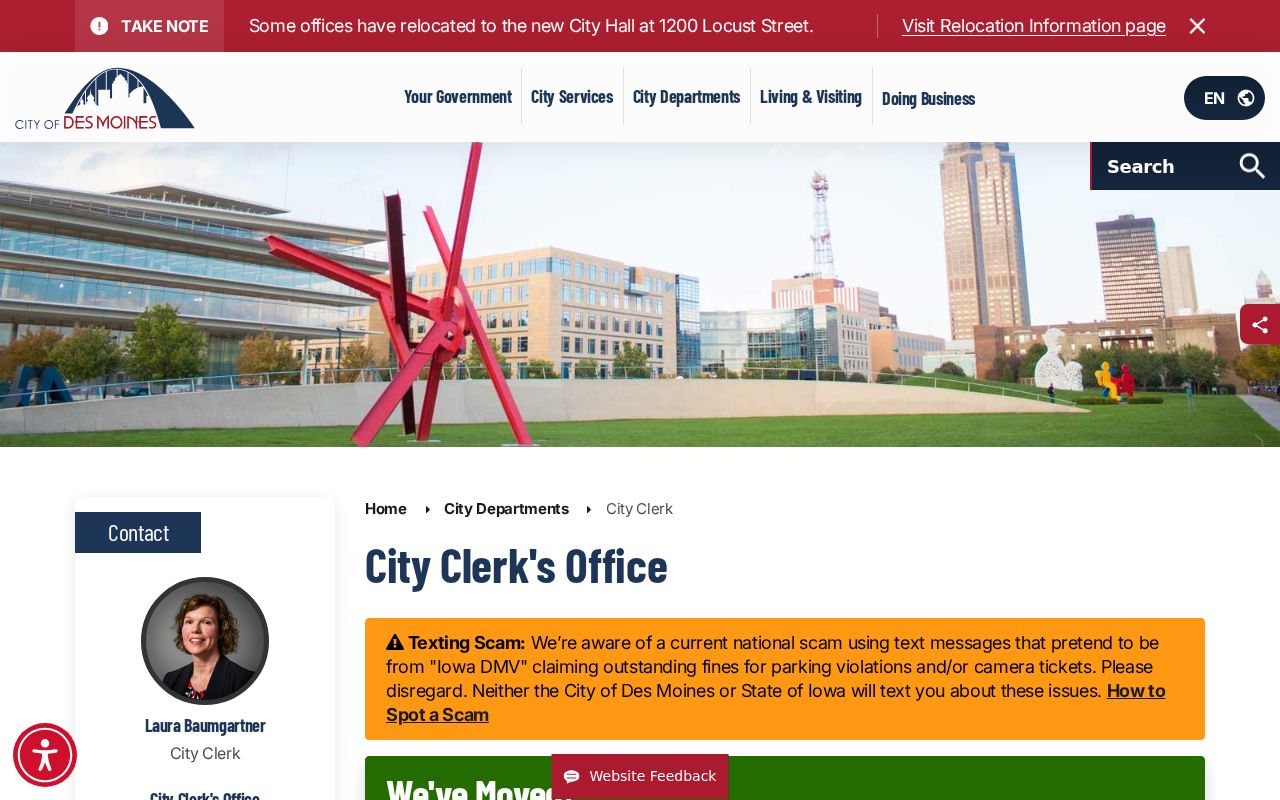
Ask for a defined record, date range, and address if a dynamic city portal does not expose an archived item. The City may charge direct costs or require a deposit under its request process. It does not have to create a new answer where no existing record answers the question.
For older block history, the State Historical Society's Polk holdings connect parcels and people through early deeds, town lots, plats, probate, naturalization, vital books, and other county series.
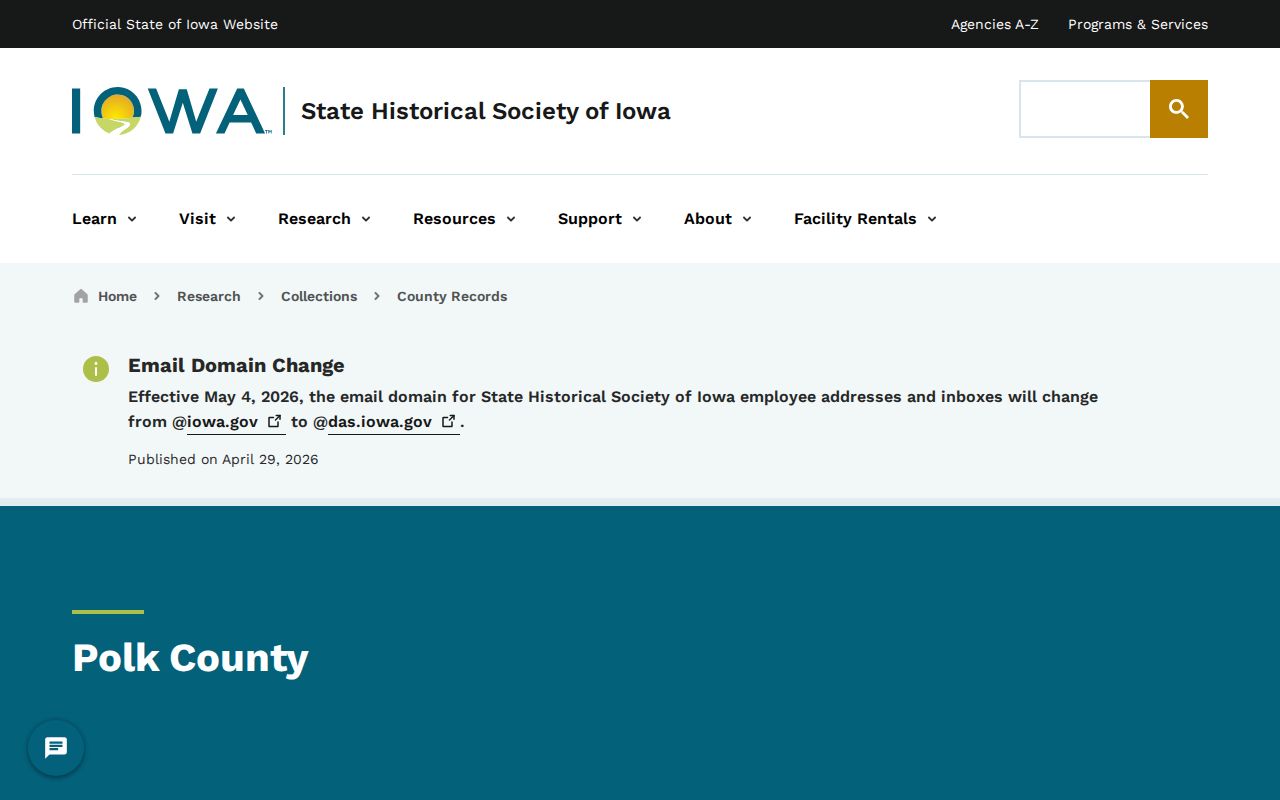
The archive view is useful when today's block grew from an old subdivision, town lot, or rural section. Search with a narrow date span and legal place terms rather than assuming the modern street label was used in early records.
Voter Limits Around Polk Blocks
The Iowa voter registration lookup asks for first name, last name, and ZIP. It can confirm a known person's registration and polling information. It cannot enumerate every voter on a block, and a non-match does not prove that a person is absent or unregistered. Recent moves, hyphens, two last names, spelling, and protected-address procedures may affect results.
A fuller voter file is a separate request through the Iowa Secretary of State voter-list process. Products, jurisdictions, selected contact or participation fields, fees, delivery, and certified purposes are controlled by Iowa law and the official form. Participation data shows whether someone took part in selected elections, never how the person voted.
Note: There is no free official voter map that reveals every registered person at each Polk County address.
Official Polk County Neighbor Records
Commercial neighbor tools compile public and marketing data. Their names may be stale, merged, or detached from the source date. Official rolls are narrower, but each names its custodian, fields, and limits. That makes a county or city result easier to verify and correct.
| Question | Official source | Compiled commercial category |
|---|---|---|
| Which lots touch? | GIS geometry and parcel identifiers | May use an unexplained radius |
| Who owns each lot? | Dated Assessor card and deed trail | May retain an earlier owner |
| Which civic group serves it? | City boundary and leader directory | May treat ZIP or marketing areas as neighborhoods |
| Who lives there? | No complete public block census | May merge owners, relatives and old occupants |
Use an official result only for what it states. Two sources that repeat the same name may still draw from one old record, so compare dates, parcel numbers, legal descriptions, and source ownership.
Protect Polk County Neighbors' Privacy
Public records do not expose every person nearby. Renters, household members, guests, utility customers, delivery recipients, private association members, sealed cases, juvenile records, victim data, and unposted contact details may be absent or protected. Iowa's Safe at Home program provides a substitute address and confidential voter-registration route for eligible participants. Protect Our Protectors and other redaction procedures can also limit visible address information.
A missing name is not an invitation to infer it from cars, photographs, relatives, or social contacts. Map proximity does not prove a personal relationship. When an official record seems wrong, contact the agency that maintains it and cite the parcel, record, and date rather than spreading an unverified claim.
Lawful use. Research Polk County neighbors for civic contact, reconnecting, property curiosity, or personal safety. Never use public details to watch, threaten, harass, or harm anyone.
Respect a direct request for privacy. For ordinary block contact, a public meeting, association leader, mailed note, or in-person introduction is often more accurate and less intrusive than trying to assemble a household profile.