
Polk County City Directory Shelves
Des Moines Public Library preserves the main city directory spine for Polk County. Its formats overlap but do not cover the same years: scans serve remote work, microfilm fills much of the early run, and print volumes continue the shelf into modern decades. The library page and Internet Archive metadata support 1866 as the first digitized year. A local-history blog says 1860, so researchers should not claim scans for 1860 through 1865 without confirming an item.
| Collection | Years | Where Held | Access |
|---|---|---|---|
| Digitized Des Moines directories | 1866-1922, listed years | DMPL / Internet Archive | Free scans and OCR |
| Directory microfilm | 1866-1935 | DMPL Central Library | In-library microfilm |
| Print city directories | 1910-present | DMPL Central Library | Library shelf and reference rules |
| Telephone books | 1957-present | DMPL Central Library | In-library address and phone context |
The DMPL historic city directory page lists the actual years and links to scans.
The image shows the library's current doorway to the collection. Missing scans are not missing directories: check the microfilm and print runs before concluding that no volume survives.
Publishers Across Polk Directory Years
The publisher changes help date an undated page and explain shifts in layout. Mills & Co. produced the listed 1866 and 1869 volumes. J.P. Bushnell appears through the 1870s and 1880s. R.L. Polk & Co. is associated with the listed 1890s through 1922 run.
| Era | Publisher | Listed years |
|---|---|---|
| 1860s | Mills & Co. | 1866, 1869 |
| 1870s | J.P. Bushnell | 1871, 1873, 1876, 1877, 1879 |
| 1880s | J.P. Bushnell | 1881-1884, 1886, 1888, 1889 |
| 1890s | R.L. Polk & Co. collection | 1892-1895, 1898, 1899 |
| 1900-1922 | R.L. Polk & Co. | 1900-1917, 1919-1922 |
Known gaps in the digitized list include 1872, 1874-1875, 1878, 1880, 1885, 1887, 1890-1891, 1896-1897, and 1923-1934. State the narrow fact: the year was not located in the digitized run. Microfilm or print may still supply it.
Polk County Local History Desk
The Central Library at 1000 Grand Avenue is the physical fallback for a city directory search blocked by bad OCR, a missing scan, or an unclear abbreviation. The DMPL local-history collection also connects directories with local books, oral histories, digitized images, newspapers, and Project Des Moines.
The collection page is the right starting point for staff help and adjacent sources. A useful request gives the name variants, street, estimated date range, and the volume or source already checked. DMPL Premium Research Services can investigate a person, topic, or event when self-service searching stops.
Note: Photograph the volume title page and abbreviation key with any entry so its date and marks remain clear later.
Inside the 1909 Polk Directory
The 1909 R.L. Polk Des Moines City and Valley Junction Directory calls itself the eighteenth edition. Its introduction reports 47,983 names, an estimated population of 107,962, 54 square miles, and 775 miles of street. These are publisher-era figures, not current government statistics.
The canvass also reached beyond the corporate limits into adjacent territory treated as part of Des Moines for directory purposes. That makes the volume rich for family history while limiting its value as proof of a legal boundary. A city directory's Des Moines, a postal city, and the municipality were not identical even then.
The 1909 scan at Internet Archive opens in the alphabetical resident pages.
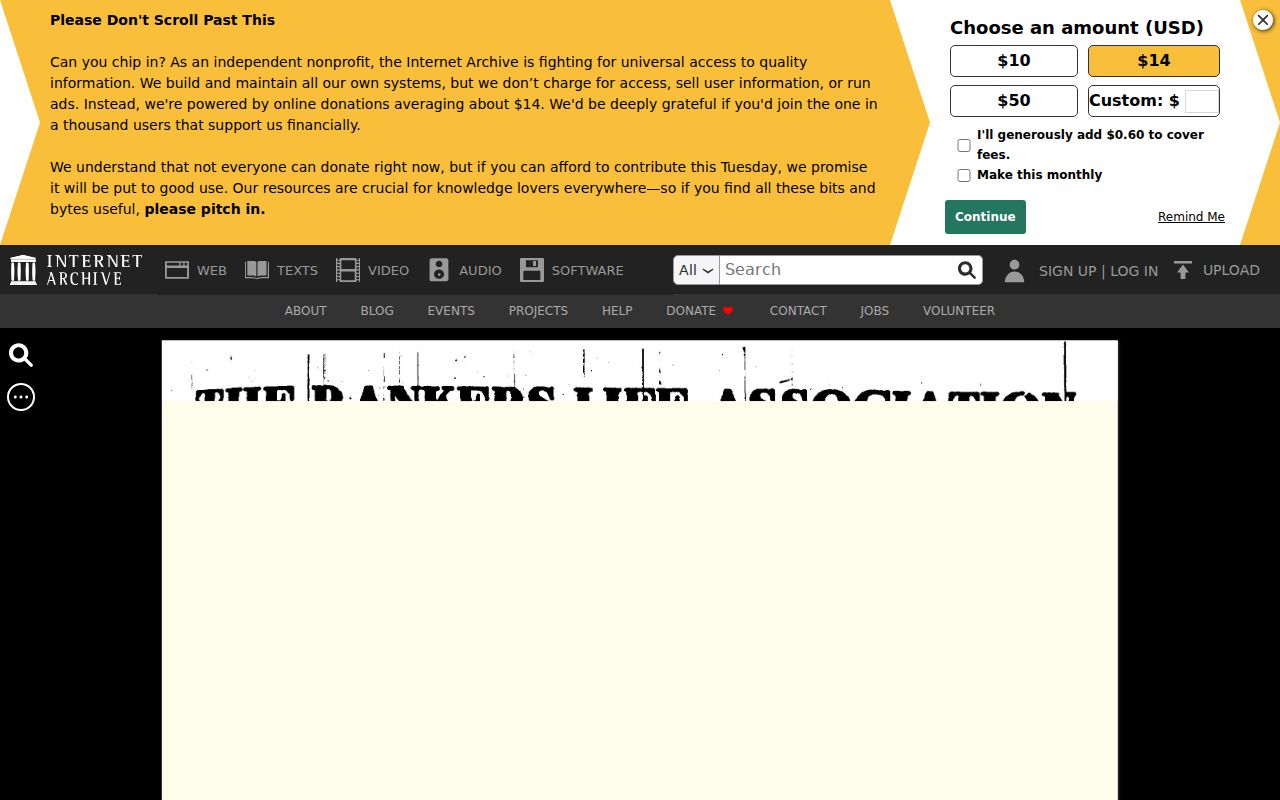
The image shows why a scan must control the reading. OCR can merge nearby lines or separate an occupation from the right person.
Read a Polk City Directory Entry
An entry is a dated identity bundle. Read the name, initials, work, household notation, and address together. On a 1909 sample page, “JONES E PAUL” appears with an office role and residence, while nearby similar-name lines create an easy OCR trap. Check the full printed line before linking an address to a person.
| Name | Surname, given name or initials; bold type may mark a featured entry |
|---|---|
| Work | Occupation, office, employer, or business affiliation |
| Address | House number and street, often preceded by a short residence mark |
| Household note | Residence, boarding, spouse, or widow wording varies by volume |
| Street guide | Address-first section used to move from house number to householder |
- Criss-cross directory
- An address-first section arranged by street and number.
- Householder index
- A street guide that points from a house to the listed person or household.
- Abbreviation key
- The volume's own list explaining short forms such as residence or boards.
A residence mark is not proof of ownership, and a boarding mark does not describe every person in the dwelling. Confirm ownership in a deed or tax record and kinship in census, vital, probate, or newspaper evidence.
Polk Newspapers Fill Directory Gaps
The DMPL newspaper and magazine index searches index records by title, subject, author, or keyword. It is not one full-text database. Its named sources include the Des Moines Register, Bystander, Tribune, Business Record, Annals, and Cityview, with distinct date ranges.
When a city directory name disappears, search initials, spouse, street, institution, and obituary terms. The Register route reaches historic issues from 1871, while Bystander coverage is especially useful for Black Des Moines community notices and organizations.
The Des Moines Register archive provides the full newspaper route.
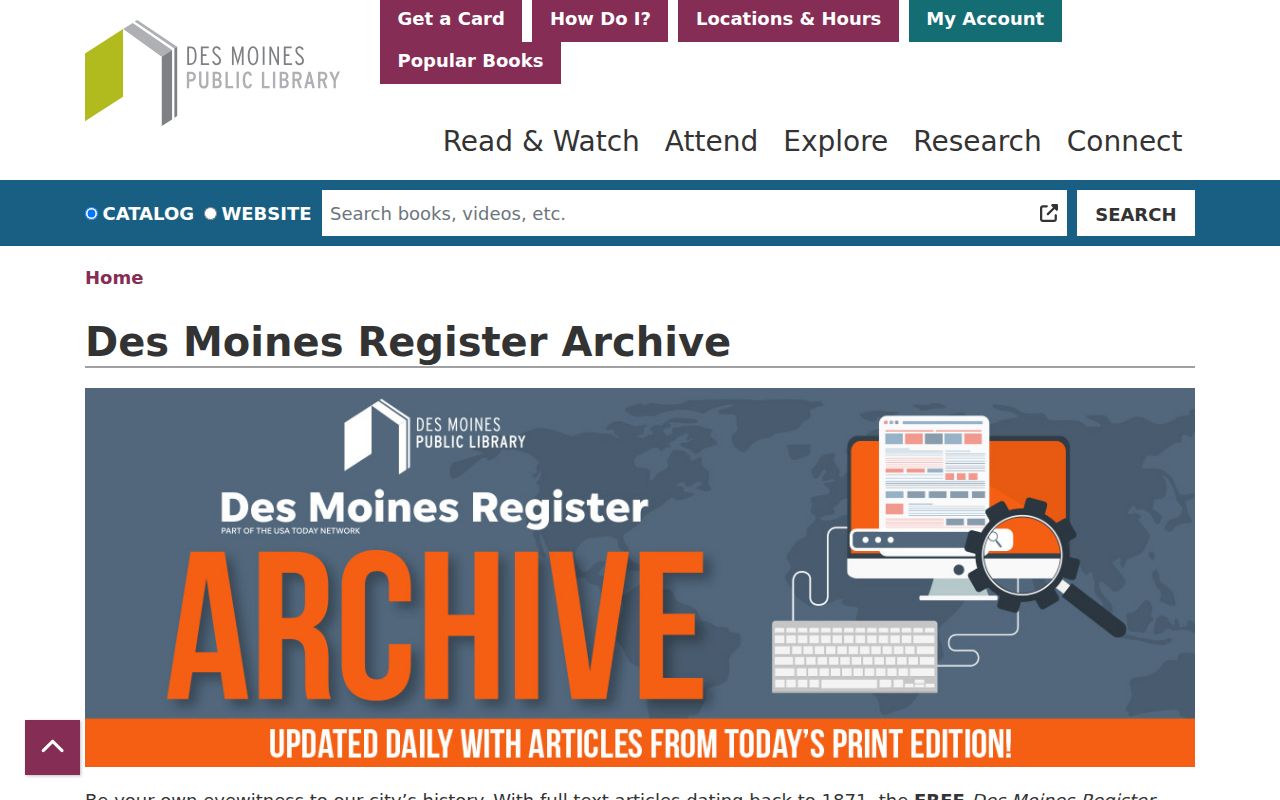
Use a dated article to explain a move, death, business change, or public event, then retain the directory entry as the address evidence for its own year.
Map Polk Directory Addresses
A directory says who was listed at an address. Maps explain the place. Library of Congress Sanborn sets for Des Moines include 1884, 1891, and 1901 material with street names, building footprints, and lot context. The University of Iowa county-atlas list includes Polk volumes for 1872, 1885, and 1895, which help with landowners and township geography.
For names that predate the directory shelf, the State Historical Society of Iowa Polk inventory lists deeds and town lots from the 1840s, probate files beginning in 1846, wills, naturalization petitions, vital series, farm-name registers, and other county books. One displayed deed range is impossible in reverse order, so ask the archive to confirm it rather than silently correcting the catalog.
This older geography can use Fort Des Moines, town-lot, subdivision, or section-township-range language. Pair an archival legal description with an atlas or plat before forcing it into a modern street address.
Polk County's paper trail crosses institutions because each office inherited a different task. The State Historical Society inventory begins with District Court judgment dockets from 1846, early probate and marriage material, school transfers, deed books, town-lot indexes, plats, and naturalization files. Des Moines Public Library supplies the printed directory and newspaper side. The Recorder supplies recorded land references, while the Polk clerk holds court and probate files. A family search should move between those custodians at the year boundary instead of treating a missing web result as a lost record.
Historic newspapers add detail that a short directory line cannot. Search a street, business, church, lodge, school, or spouse along with the resident's name. A death notice may point to a cemetery and relatives. A probate docket can name an executor or heirs. A deed can distinguish an owner from a boarder listed in the same building. Each source has its own purpose, so agreement among dates and addresses matters more than a similar spelling.
No verified catastrophic courthouse fire was found in the official Polk sources reviewed. The sound explanation for gaps is distribution: some records remain in county books, some in clerk files, some on microfilm, and some in archive catalogs. Ask the named custodian about the exact series and year before concluding that it was destroyed.
Trace Family in Polk Directories
Family history gains depth when one city directory entry becomes a sequence. Keep the exact spelling, initials, occupation, address, and household mark for each year. That makes it easier to separate two people with the same name and to spot a move that OCR alone may hide.
- Find the earliest likely alphabetical entry. Save the scan page, volume year, printed name, work, and address.
- Check the next and prior available years. Mark a gap as “not in the digitized run” until the microfilm or print copy is checked.
- Turn to the street guide when the surname vanishes. Compare the number, direction, nearby addresses, and any old street form.
- Pair the directory trail with the 1870, 1880, 1900, 1910, 1920, 1930, 1940, or 1950 federal census where relevant. Census data can supply ages and relationships missing from the directory.
- Close a move or disappearance with a newspaper, obituary, deed, probate file, cemetery result, or later volume.
Absence has several causes: the person moved, died, went unlisted, appeared under a spouse or initials, or fell into a year that is not online. The modern Polk County street directory takes over when the question shifts from a historical household to current parcel and address records.
Note: Treat every directory statement as true for its publication period, then corroborate the identity and event in a second source.